The Judgment Tax
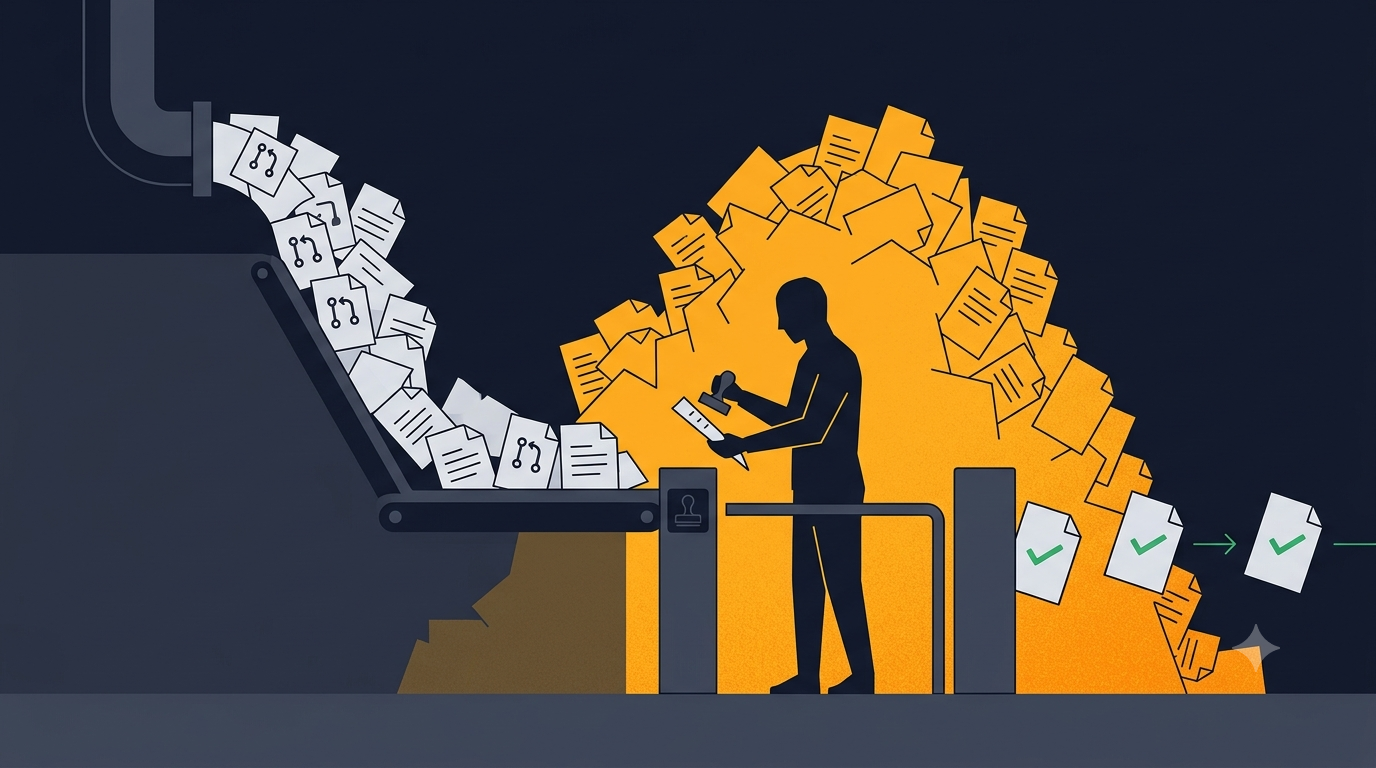
🎯 Hook
Node.js went from 5 security reports a month to 64.
The maintainer who got flooded isn't some overwhelmed junior — he maintains the HTTP stack and wrote the RFC-level guard himself. He still shipped a fix that broke node-fetch@2 across Google APIs, Firebase, and Backstage.
If the guy who wrote the spec can't keep up, what does that say about the rest of us grading AI output all day?
🔥 Hot Take
💬 My take: The scarce resource stopped being code generation a while ago. It's review bandwidth — and almost nobody is resourced like review is the expensive part. Osmani's piece says your career moat is judgment because agents commoditize everything gradeable. Collina's postmortem is what happens when that judgment gets overrun by volume anyway, even with world-class expertise sitting behind it. Judgment doesn't scale just because you're an expert. It scales when you build a process that protects your attention from noise — and breaks when you don't.
📰 Top Articles
1. CVE-2026-48931 Shouldn't Have Been a CVE
TL;DR: Matteo Collina — Node.js/undici core maintainer — filed and fixed a CVE for HTTP response queue poisoning, then wrote the postmortem arguing it never should have been classified as a vulnerability. The rushed fix broke node-fetch@2, cascading into Google APIs, Firebase CLI, Backstage, and official Node Docker images. The deeper cause: AI-generated security reports have gone from ~5/month to 64/month, ~88% noise, and the volume ate the deep review that a protocol-level nuance actually needed.
My take: The guard itself was legitimate hardening — that's not the failure. The failure is the process: a security fast-path that ships to every supported line simultaneously, skipping the "soak on Current first" step that would normally catch a regression like this. Evidence-gathering broke down under volume, not technical judgment. That's the more uncomfortable read — you can be the world's foremost expert on the exact bug in front of you and still get steamrolled by throughput.
2. The Agent-Era Career
TL;DR: Addy Osmani's framing for what's actually defensible once agents handle anything with an answer key: problem selection, verification, and finishing past where the machine stops. His prescriptions — keep a private log of every time an agent looks wrong, treat every diff like a human PR from a stranger, never let agents grade their own homework — read like an operating manual for staying sharp under AI-generated volume.
My take: Read next to Collina's postmortem, this stops being career-advice-as-usual and starts reading like a direct diagnosis of what was missing that week. Osmani's "keep a log of every time it looks wrong" is exactly the muscle that a 64-report month exhausts. The theory and the cautionary tale are the same argument, just running in opposite directions.
🔗 The Thread Between Them
Osmani describes the skill. Collina supplies the postmortem of what happens when that skill gets rationed by volume instead of protected by process.
- Osmani: judgment is the moat because it can't be delegated upward.
- Collina: even the person best equipped to exercise that judgment lost the fight to throughput — not because he lacked the skill, but because nothing in the process was built to ration his attention.
Neither piece is anti-AI. Both are making the same case for treating review capacity as the actual constraint — not a side effect of "moving fast."
💡 Dev Tip of the Week
Steal Osmani's private-log idea and point it at Collina's problem. Track every AI-flagged item you approve or reject this week — security report, PR, whatever crosses your desk:
date | source | flagged as | your call | time spent | confidence (1-5)
Why it matters: If your "confidence" column is trending down while volume trends up, you're not reviewing anymore — you're rubber-stamping. That log is how you catch it before it costs you a node-fetch@2-sized regression.
🤔 Community Question
❓ When AI-generated reports, PRs, or tickets started outpacing your team's review capacity, what actually worked — more reviewers, a triage filter, or just moving faster and hoping? Curious what's held up under real volume vs. what just felt like progress.
📌 What I'm Learning / Building
Still chewing on Osmani's "last 30% is the whole game" line alongside Collina's postmortem. Been trying it on my own AI-assisted diffs this week: treat every one like an anonymous PR from a stranger, and actually log the ones I almost approved without reading closely. Uncomfortable how often that log has an entry.